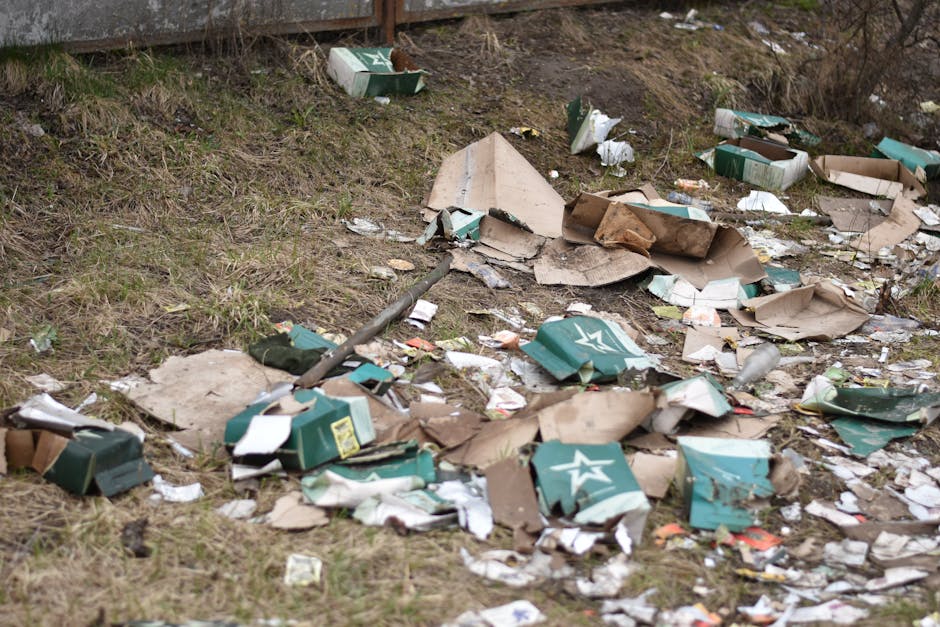
Who Covers Fly-Tipped Waste in Croydon Gardens?
Fly-tipped waste in a garden is one of those problems that can go from annoying to properly stressful very quickly. One day the space is tidy, the next there's a pile of bags, broken furniture, ???????????? rubble, or worse sitting where your patio, lawn, or planting beds should be. If you are trying to work out who covers fly-tipped waste in Croydon Gardens, the honest answer is: it depends on where the waste is, who owns or controls the land, and whether the waste is on private property, shared ground, or council-managed land.
This guide breaks that down in plain English. You'll learn how responsibility is usually assigned, what removal options make sense, how to avoid paying for the wrong thing, and what to do if the waste came from a neighbour, a builder, or an unknown third party. If you need related support for wider garden clearance or outdoor rubbish removal, it can also help to understand services such as garden clearance, rubbish removal, and, where the mess is bigger than it first looks, house clearance. That context matters more than people think.
Truth be told, fly-tipping is rarely just a "bin bag problem". It often involves access issues, insurance questions, and a bit of detective work. So let's make it simple.
Table of Contents
- Why Who Covers Fly-Tipped Waste in Croydon Gardens? Matters
- How Who Covers Fly-Tipped Waste in Croydon Gardens? Works
- Key Benefits and Practical Advantages
- Who This Is For and When It Makes Sense
- Step-by-Step Guidance
- Expert Tips for Better Results
- Common Mistakes to Avoid
- Tools, Resources and Recommendations
- Law, Compliance, Standards, or Best Practice
- Options, Methods, or Comparison Table
- Case Study or Real-World Example
- Practical Checklist
- Conclusion
- Frequently Asked Questions
Why Who Covers Fly-Tipped Waste in Croydon Gardens? Matters
If you've got fly-tipped waste in a garden, the first question is rarely "How do we move it?" It's usually "Whose problem is this?" And that's the key, because the answer affects who pays, who arranges clearance, how quickly the mess can be removed, and whether there are any follow-up steps such as reporting, documenting damage, or speaking to neighbours.
In a place like Croydon, where gardens can back onto alleyways, service roads, shared access paths, or boundary walls, it's not always obvious where responsibility begins and ends. A pile of rubbish near a hedge may look like it belongs to one property, but it could have been dumped from the rear lane or dragged in from adjacent land. That's why a quick assumption can lead to wasted money. Nobody wants to book a clearance and then realise, a week later, that the wrong person paid.
It matters for a second reason too: fly-tipped waste can attract more waste. Once one bag appears, other people often follow. It sounds grim, but it happens. A few loose items can become a small dumping spot if no one acts. That's why prompt removal is not just about tidiness; it's about stopping the problem from growing.
If the waste is mixed with garden debris, broken fencing, and general junk, it can be worth looking at a broader garden waste removal approach rather than treating it like a simple one-item collection. The practical distinction matters. A lot.
Expert summary: the person or organisation that "covers" fly-tipped waste is usually the one with responsibility for the land where it was dumped, unless the waste is on council land or a specific contractual arrangement says otherwise. That sounds neat on paper, but real life is often messier.
How Who Covers Fly-Tipped Waste in Croydon Gardens? Works
The simplest way to think about it is this: responsibility follows land ownership, land control, and the terms of any relevant service agreement. In practice, that means the answer changes depending on the location.
Common situations
- Private residential garden: usually the homeowner or occupier arranges removal, unless someone else caused the dumping and liability can be established separately.
- Shared or communal garden: the landlord, managing agent, housing provider, or residents' association may be responsible, depending on agreements and boundaries.
- Council-managed land: the local authority typically handles reporting and collection, but not every small patch of land qualifies the same way, so it's worth checking carefully.
- Commercial premises with outdoor space: responsibility generally sits with the property owner or business occupier, particularly where access control is theirs.
There's also a difference between removal responsibility and cost recovery. You may be responsible for organising the clearance even if another party caused the mess. That's frustrating, no question. But it's a real-world distinction people often miss.
For example, if a builder leaves waste over a boundary, the garden owner may still need the waste removed quickly to protect use of the space, while separately keeping records for a claim or dispute. If the waste is heavy or includes awkward items, a service like soil disposal or concrete removal may be more relevant than a general "rubbish" approach. The type of waste shapes the method.
In our experience, the practical process usually looks like this: identify the land type, photograph the waste, check whether anyone else may be responsible, and then choose the fastest safe removal route. Simple enough in theory. Slightly less simple when the bin bags are wet and the garden gate won't shut properly.
Key Benefits and Practical Advantages
Understanding who covers fly-tipped waste in Croydon Gardens saves time, money, and a fair bit of frustration. It also helps you make cleaner decisions when the pressure is on, which is often exactly when people are rushed into the wrong call.
- Faster action: once responsibility is clearer, you can arrange removal without delay.
- Lower risk of disputes: good records and correct assumptions reduce back-and-forth with neighbours, landlords, or agents.
- Better budgeting: knowing whether the waste is your obligation or a shared one helps avoid surprise costs.
- Safer gardens: fly-tipped waste can include sharp edges, broken glass, contaminated items, or hidden hazards.
- Cleaner evidence trail: if you later need to report the dumping, photos and notes help enormously.
- More suitable service choice: the right collection method depends on whether the waste is mixed, bulky, heavy, or simply a small pile of bags.
There's also a peace-of-mind benefit that's hard to measure. You know the space is dealt with properly, and you can get back to using it. That sounds obvious, but if you've ever stared out of the kitchen window at a pile of dumped junk for three days straight, you'll know how much it affects the feel of a home.
For larger outdoor clearances where the waste includes old furniture, broken fencing, and dense garden material, it can make sense to review a more complete property clearance approach. Sometimes the best solution is the one that handles the whole picture instead of just the most visible pile.
Who This Is For and When It Makes Sense
This topic matters to a fairly wide group of people, and the same garden can involve more than one responsible party. That's the awkward bit. A front garden, a rear garden, a shared pathway, and a neighbouring access strip may all have different ownership or maintenance arrangements.
- Homeowners: if waste appears in your private garden, you usually need to arrange removal unless the dumping can be clearly linked to someone else and action is being taken separately.
- Tenants: you may need to report the issue to your landlord or agent, especially if the garden is part of a rented property.
- Landlords and letting agents: for managed properties, responsibility may sit with the owner or the manager, depending on the tenancy and access arrangements.
- Managing agents and freeholders: communal or shared outdoor spaces often need a coordinated response rather than an individual one.
- Businesses: if the waste affects a commercial yard, side passage, or rear garden space used by a premises, the occupier or owner usually has to act quickly.
- Neighbouring property owners: if the waste appears to have crossed boundaries or been dumped from adjacent land, a conversation may be sensible, but keep it calm and factual. No one enjoys a shouting match over a pile of old wood and soil.
If you are dealing with a garden that has become part storage area, part dumping ground, part "we'll sort that later", then a proper garden clearance service can be more practical than trying to piece it together yourself. The same is true if the space includes mixed materials, because mixed waste tends to be slower and messier to sort.
Step-by-Step Guidance
If you're trying to figure out what to do next, here's the simplest way to approach it without getting overwhelmed.
- Inspect the waste safely. Don't move anything sharp, wet, or suspicious. Look first.
- Take clear photos. Get close-ups and wider shots showing where the waste sits in relation to fences, gates, and boundaries.
- Work out the land type. Private garden, shared area, landlord-managed space, or council land? That distinction changes the next step.
- Check for obvious clues. Packaging, labels, contractor markings, or recent delivery activity may help identify the source.
- Report it if needed. If it appears to be on public land or the source is unknown, reporting may be appropriate before arranging removal.
- Decide whether the waste is urgent. If it's blocking access, attracting pests, or creating a hazard, treat it as a priority.
- Choose the right clearance method. Small, accessible piles may suit a straightforward collection; heavier or mixed waste may need a fuller service.
- Keep records. Save photos, messages, and any details about the source, especially if there may be a dispute later.
- Follow up if needed. If the waste was dumped by a contractor, neighbour, or unknown party, you may need a separate recovery or complaint route.
A small but useful tip: if you think the waste may contain soil, rubble, or broken hard landscaping materials, mention that early. Items like these change loading time, vehicle needs, and disposal handling. It seems minor until the crew arrives and finds the "small pile" weighs more than a family car.
Expert Tips for Better Results
Here's where a little experience makes a big difference. Most fly-tipping issues are not solved by brute force; they're solved by good judgement and a calm first move.
- Check the boundary before booking anything. If the waste sits partly on a neighbour's land or a communal strip, don't guess.
- Separate what is clearly garden waste from what is household or builder waste. Mixed waste often needs different handling.
- Be wary of hidden weight. Wet soil, soaked carpets, and broken paving are much heavier than they look.
- Keep children and pets away. Sharp metal, exposed nails, and mouldy material are all common in dumped waste.
- Ask whether access is easy. A narrow side gate, steps, or a long carry distance can affect the most sensible clearance method.
- Document everything before moving it. Once it's gone, your evidence is gone too.
Another practical point: if the waste has been there for a while, it may have become damp, compacted, or partly hidden by leaves. That's especially true in the corners of a garden where nobody looks until the weekend. A quick glance in daylight is not the same as a proper inspection. Not even close.
And if the waste includes bulky household items alongside garden debris, looking at broader garage clearance or mixed rubbish support may be useful, because the clearance plan should match the actual contents, not the label someone guessed at.
Common Mistakes to Avoid
People tend to make the same handful of mistakes with fly-tipped waste. Fair enough, because the situation is frustrating and often happens suddenly. Still, these errors can make it costlier or harder to resolve.
- Assuming the council always pays: not every dumped waste problem on or near a garden falls to the council.
- Throwing everything into one category: garden debris, household rubbish, and construction waste are not always treated the same way.
- Skipping photos: without evidence, it is much harder to prove what happened.
- Moving waste before checking for hazards: broken glass, needles, chemicals, and sharp timber are not things to improvise around.
- Booking the wrong service: a general collection may not be suitable for soil, rubble, or mixed hardcore.
- Waiting too long: the longer waste sits, the more likely it is to spread, smell, or attract more dumping.
- Ignoring access issues: if the crew can't reach the waste safely, the job gets slower and more expensive.
One more that catches people out: not checking whether the garden is actually private or shared. In London, especially around closely packed properties, the boundary line can be a bit of a silent troublemaker.
Tools, Resources and Recommendations
You do not need a van full of equipment to deal with fly-tipped waste, but a few basic tools and habits help.
- Gloves: thick work gloves are better than thin gardening gloves if there are sharp edges.
- Closed footwear: sturdy shoes or boots reduce the risk of punctures and slips.
- Phone camera: take multiple photos before touching anything.
- Bin bags or containers: useful for small loose litter, but not for heavy rubble or sharp debris.
- Measuring tape or rough scale reference: helps estimate volume when you are discussing the job.
- Notepad: jot down date, time, and anything you noticed about access or source clues.
For larger, awkward, or mixed loads, it helps to compare the likely clearance route before deciding what to do. Sometimes a simple collection is enough. Sometimes it is not. If you have old sheds, timber, and garden junk all mixed together, then services such as shed clearance may be a better fit than treating the job as ordinary rubbish.
Recommended approach? Keep it practical. Keep it documented. And if there is any doubt about weight, hazard, or access, don't guess your way through it. That's where delays happen.
Law, Compliance, Standards, or Best Practice
This section needs a careful note. Legal responsibility around fly-tipping can depend on the specific land ownership, tenancy, access arrangement, and the nature of the waste. It is sensible to treat the following as broad best-practice guidance rather than legal advice.
In the UK, fly-tipping is generally treated as an environmental crime, and there can be separate issues around waste duty of care, unlawful dumping, or negligence depending on who caused it. But for a property owner or resident dealing with a garden, the immediate concern is usually practical: who is responsible for the land, who must arrange removal, and whether the incident should be recorded or reported.
Good practice usually means:
- identifying the land boundary before taking action;
- keeping photographic evidence;
- checking for hazardous items before handling waste;
- using a legitimate waste carrier or clearance provider where a paid service is involved;
- keeping records of what was removed and when;
- separating suspected fly-tipped material from ordinary garden waste when possible.
If the waste came from works carried out by someone else, it can also be wise to keep contractor details, emails, and photos of the before/after state. That sort of paper trail is dull until you need it. Then it is gold.
Options, Methods, or Comparison Table
There is no single best method for every garden. The right route depends on volume, weight, access, and who actually needs to cover the cost.
| Option | Best for | Pros | Limitations |
|---|---|---|---|
| DIY removal | Very small, safe, light waste | Immediate, low cost if you already have the tools | Time-consuming, safety risks, disposal logistics |
| Partial sort and load | Mixed but manageable garden waste | Can reduce disposal complexity | Still needs lifting, sorting, and transport |
| Professional garden clearance | Moderate to large garden waste or fly-tipped debris | Fast, efficient, less hassle | Cost depends on volume and access |
| Specialist mixed-waste removal | Hardcore, timber, furniture, and mixed rubbish | Better for awkward loads and larger jobs | May need more detailed quoting |
As a rule of thumb, if the pile is more than you can safely handle in a few bags, or if there are broken materials in it, a professional option tends to make more sense. Especially if the waste is in a rear garden with a long carry, which is where even "small" jobs become surprisingly annoying.
Case Study or Real-World Example
Here's a realistic example. A homeowner notices two black bags, some broken decking offcuts, and a rusty chair dumped at the back of a Croydon garden overnight. At first glance, it looks like a simple clear-up. But the bags are damp, one bag has food waste mixed in, and the decking offcuts have old nails sticking out at odd angles. Lovely.
The homeowner first photographs the scene from the kitchen door and along the side return, then checks whether the items are fully within the private garden or straddling a shared rear boundary. It turns out the waste is entirely inside the garden, so the homeowner arranges removal rather than waiting for a third party to take ownership. Because the items are mixed and awkward, a broader outdoor clearance is more efficient than bagging everything separately.
The useful part here is not just the removal itself. It's that the homeowner kept evidence, checked the boundary, and dealt with the issue before the pile spread. A week later, when the weather turned damp, the waste would have been heavier, smellier, and less pleasant to move. Simple actions at the start made all the difference.
That's the sort of job where a focused furniture removal or mixed-load approach can save time, especially if the dumped material includes more than just garden waste.
Practical Checklist
Use this checklist when you first spot fly-tipped waste in a garden. It keeps the job grounded and stops you from missing something obvious.
- Take photos before touching anything
- Confirm whether the waste is on private, shared, or public land
- Check for sharp, heavy, wet, or hazardous material
- Note any labels, packaging, or clues about the source
- Decide whether the issue needs urgent removal
- Tell the landlord, agent, or managing party if the space is not solely yours
- Separate garden waste from household or builder waste where possible
- Choose a clearance method that matches the actual load
- Keep records of dates, photos, and any messages
- Follow up if the waste was dumped by a contractor or known third party
Quick reminder: if you are unsure whether a bag contains something risky, leave it alone until it can be assessed properly. That one bit of caution can prevent a nasty day.
Conclusion
So, who covers fly-tipped waste in Croydon Gardens? Usually, it comes down to the landowner, occupier, landlord, managing agent, or council depending on exactly where the waste landed and who controls the space. The tricky part is not the idea itself. It's figuring out which category your garden falls into, then choosing the right next step without wasting money or time.
The best outcomes usually come from the same few habits: take photos, check boundaries, separate waste types, and act before the pile becomes a bigger problem. That's the practical reality. Not glamorous, but effective.
And if the situation feels messy, well, it often is. Still, a clear plan goes a long way. One careful step at a time.
Get a free quote today and see how much you can save.
Frequently Asked Questions
Who is usually responsible for fly-tipped waste in a private garden?
In most cases, the person who owns or occupies the private garden is responsible for arranging removal, even if they did not dump the waste themselves. If another party caused it, you may still need to clear it first and then pursue the issue separately.
Does the council always remove fly-tipped waste for free?
No, not always. If the waste is on council land, the local authority may deal with it, but private gardens and shared property often fall outside that. The exact situation depends on where the waste is and who controls the land.
What should I do first when I find dumped rubbish in my garden?
Take photos, avoid touching hazardous items, and work out whether the waste sits on private, shared, or public land. Those first few minutes matter because they shape both responsibility and the safest removal route.
Can I charge a neighbour if I know they dumped it?
Possibly, but that depends on evidence and the circumstances. It is best to keep records and avoid assuming too much before you have clear proof. Calm documentation tends to help more than confrontation, to be fair.
Is fly-tipped garden waste treated differently from household rubbish?
Sometimes yes. Garden waste, household waste, and construction debris can all need different handling, especially if the pile is mixed. Soil, rubble, timber, and furniture may all affect the method and cost.
Do I need to sort the waste before booking a clearance?
Not always, but basic separation helps. If you can easily identify garden waste, household items, or hard materials like concrete, that makes quoting and removal smoother. Don't force it if the pile is unsafe.
What if the waste is in a shared garden or communal space?
Shared spaces usually involve a landlord, managing agent, freeholder, or residents' group. Responsibility may be shared or contract-based, so it is worth checking the management arrangement before booking anything.
How quickly should fly-tipped waste be removed?
As soon as practical, especially if it blocks access, smells, attracts pests, or includes sharp or hazardous material. In the real world, delays often make the job worse and slightly more expensive too.
Can fly-tipped waste hide dangerous items?
Yes. Broken glass, nails, needles, chemicals, and contaminated bags are all possible. That is why it is safer to inspect carefully before moving anything by hand.
What records should I keep?
Keep photos, dates, any messages about the incident, notes on where the waste was found, and details of who you contacted. If the issue becomes a dispute, that record can be very useful.
What if the waste came from a builder or contractor?
If a contractor left waste behind, keep all paperwork and photographs. You may still need to clear the space first, but the evidence can help you challenge the issue or seek recovery later.
Is professional removal worth it for a small amount of fly-tipped waste?
Often yes, if the waste is awkward, heavy, dirty, or potentially hazardous. A small-looking pile can be far more work than it first appears, especially in a rear garden with tight access and a long carry.
What is the safest way to deal with unknown rubbish in a garden?
Do not guess. Check for hazards, use gloves and proper footwear if you need to inspect it, and get help if the waste looks contaminated or too heavy to move safely. Safety first, always.